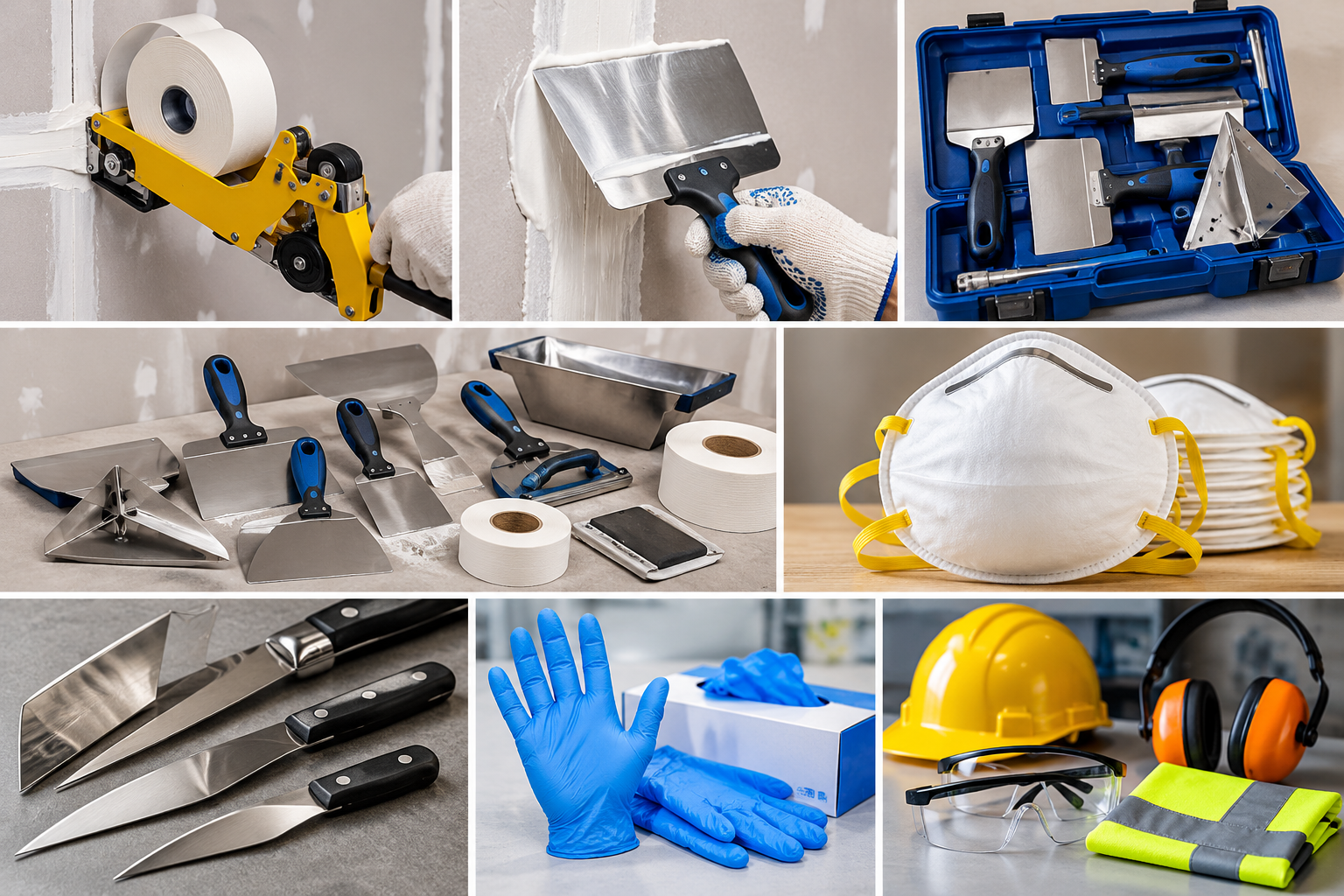
The quality of a finished drywall surface depends heavily on how evenly joint compound is applied. Small ridges, thick edges, and inconsistent feathering can remain visible after painting, especially under direct lighting.
A well-selected drywall taping knife helps workers control compound thickness, smooth transitions, and improve finishing accuracy.
Understanding blade sizes, flexibility, materials, and handling techniques makes it easier to achieve consistent results across different projects.
What Is a Drywall Taping Knife?
A drywall taping knife is a flat-bladed hand tool used to apply and smooth joint compound over drywall seams, fastener heads, and surface imperfections.
Unlike smaller filling tools intended for narrow repairs, taping knives are available in various widths to support multiple finishing stages.
Their broad blades distribute compound while helping create smooth transitions between repaired sections and surrounding surfaces.
Choosing the Correct Blade Width
Blade width significantly influences application control and the appearance of finished joints.
Different stages of drywall finishing generally benefit from different sizes.
Narrow Blades for Initial Work
Smaller blades provide greater control when covering fasteners, filling narrow gaps, or applying compound in confined areas.
They are useful where precision matters more than broad coverage.
However, narrow blades may leave visible edges when used for wide finishing coats.
Medium Blades for Joint Treatment
Medium-width blades work well for embedding tape and applying initial finishing layers.
They offer a balance between maneuverability and surface coverage.
Workers can use them to remove excess compound while keeping the reinforced joint properly embedded.
Wide Blades for Final Finishing
A wider drywall taping knife helps feather compound over a larger area.
This technique creates gradual transitions that are less noticeable after painting.
Wide blades require controlled pressure because uneven handling can leave ridges along the edges.
Blade Material and Flexibility
The material and flexibility of a blade influence its handling characteristics.
Stainless Steel Blades
Stainless steel offers corrosion resistance and is generally easy to maintain.
A clean, undamaged edge supports consistent application.
However, corrosion resistance does not eliminate the need for proper cleaning and drying.
Flexible Versus Stiff Blades
Flexible blades adapt more readily to surface contours and can help feather finishing coats.
Stiffer blades provide greater control when applying pressure or removing excess material.
The ideal choice depends on the finishing stage and individual technique.
How to Use a Drywall Taping Knife Correctly
Good technique helps prevent common finishing problems.
Step 1: Prepare the Surface
Ensure the drywall is secure and free from loose dust, debris, and protruding fasteners.
Inspect seams for gaps or damaged edges that may require preliminary treatment.
Step 2: Load the Blade
Place a manageable amount of joint compound along the blade edge.
Avoid overloading, which can cause dripping and uneven application.
Step 3: Spread the Compound
Hold the blade at a consistent angle and move it smoothly along the joint.
Apply enough pressure to distribute the material without removing excessive compound.
Step 4: Feather the Edges
Reduce pressure toward the outer edges to blend the compound into the surrounding surface.
Gradual transitions are especially important during finishing coats.
Step 5: Inspect the Result
Look for ridges, bubbles, and uneven thickness.
Allow the compound to dry fully before applying additional coats or sanding.
Common Mistakes to Avoid
Even experienced workers can encounter problems when blade handling becomes inconsistent.
Applying too much compound increases drying time and creates unnecessary sanding.
Using a damaged blade may leave repeated lines across the surface.
Failing to clean the drywall taping knife between applications can introduce hardened particles into fresh compound.
Working too quickly can also create uneven transitions that become visible after painting.
Cleaning and Storage Tips
Clean the blade after each use before compound hardens.
Dry metal surfaces thoroughly and inspect the edge for nicks, bends, or other damage.
Store the tool in a location that protects the blade from contact with hard objects.
Avoid using excessive force to remove hardened material, as this may damage the working edge.
Conclusion
A drywall taping knife plays an essential role in achieving smooth, professional-looking walls. Choosing the appropriate blade width, understanding flexibility, and applying controlled pressure can improve finishing accuracy.
Regular cleaning and careful storage help maintain consistent performance.
With the right techniques and attention to detail, even challenging drywall joints can be finished with cleaner edges and smoother transitions.