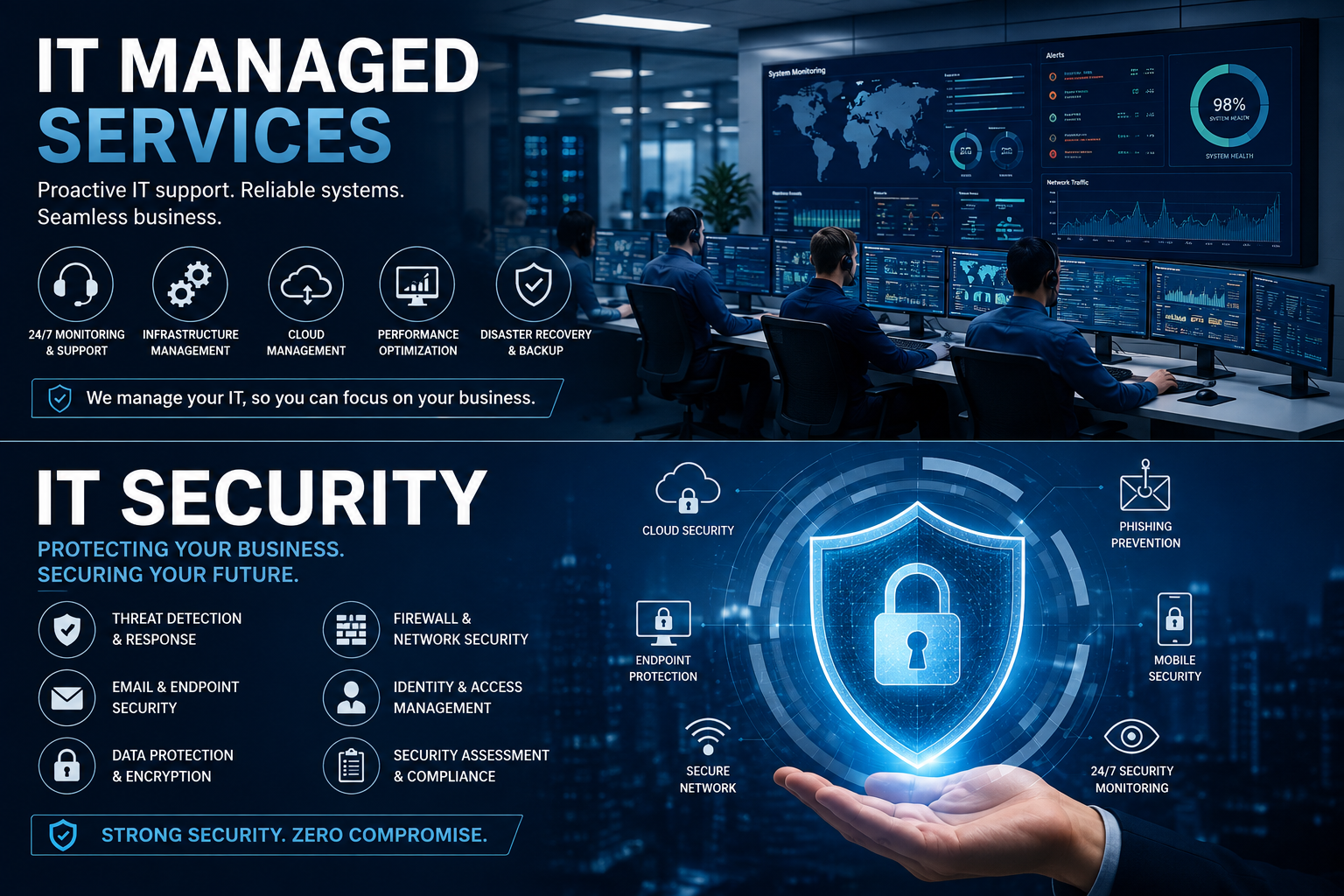
Digital information has become one of the most important resources in modern business operations.
Organizations use connected systems to communicate, collaborate, store records, and complete everyday assignments. However, these conveniences also introduce security responsibilities that cannot be ignored.
Unauthorized access, malicious activity, accidental information loss, and outdated configurations can create serious operational difficulties.
Managed it security services help businesses establish a more systematic approach to identifying risks and maintaining protective measures.
Why Business Security Requires Continuous Attention
Security is not a one-time activity.
New vulnerabilities may emerge, employees may change responsibilities, and existing systems may require updated configurations.
A protective measure that was appropriate several months ago may need reassessment as business requirements evolve.
Understanding Common Security Risks
Organizations can encounter risks involving suspicious messages, compromised credentials, unauthorized access, and unprotected information.
Human mistakes may also create vulnerabilities.
For example, an employee could accidentally share confidential information with an unintended recipient.
Understanding these possibilities is the first step toward establishing effective safeguards.
Moving from Reaction to Prevention
Waiting until a security incident occurs can expose an organization to unnecessary disruption.
Preventive practices emphasize monitoring, access reviews, updates, and employee awareness.
Although no approach can eliminate every risk, consistent security management can reduce exposure and improve preparedness.
Essential Elements of Managed IT Security Services
A comprehensive security strategy combines technical controls with organizational procedures.
Access Management
Employees should receive access appropriate to their responsibilities.
Regular permission reviews help identify outdated accounts and unnecessary privileges.
Strong authentication practices provide additional protection against unauthorized access.
System Updates and Vulnerability Reviews
Outdated software and poorly configured systems may contain weaknesses.
Routine updates and vulnerability assessments help organizations identify issues requiring attention.
Changes should be evaluated carefully to avoid disrupting important business activities.
Monitoring and Incident Detection
Unusual activity can indicate a potential security concern.
Monitoring helps organizations recognize suspicious patterns and investigate them promptly.
Clear escalation procedures are important when an issue requires immediate attention.
Backup and Recovery Preparation
Security planning must also consider information availability.
Reliable backups and documented recovery procedures help organizations prepare for accidental deletion, system failures, and disruptive incidents.
Regular restoration testing provides greater confidence in recovery arrangements.
The Human Side of Information Security
Technical controls alone cannot address every risk.
Employees make daily decisions about passwords, information sharing, unfamiliar messages, and device usage.
Encouraging Security Awareness
Practical training can help employees recognize suspicious requests and understand safe information-handling procedures.
Training should use realistic examples and clear explanations.
Establishing a Reporting Culture
Employees should feel comfortable reporting potential mistakes or unusual activity promptly.
Early reporting may help limit the impact of an incident.
Organizations benefit when security responsibilities are communicated clearly rather than treated as an occasional technical concern.
Evaluating Security Readiness
Businesses should regularly review their most important information, potential vulnerabilities, and existing protective measures.
A useful assessment considers access controls, employee practices, recovery procedures, and incident response responsibilities.
Managed IT security services can support this structured evaluation and help organizations prioritize improvements according to risk.
Conclusion
Managed IT security services encourage organizations to protect business information through continuous monitoring, preventive maintenance, access management, and employee awareness.
Effective security depends on consistency rather than isolated technical actions.
By treating information protection as an ongoing business responsibility, organizations can improve resilience and maintain greater confidence in their digital operations.